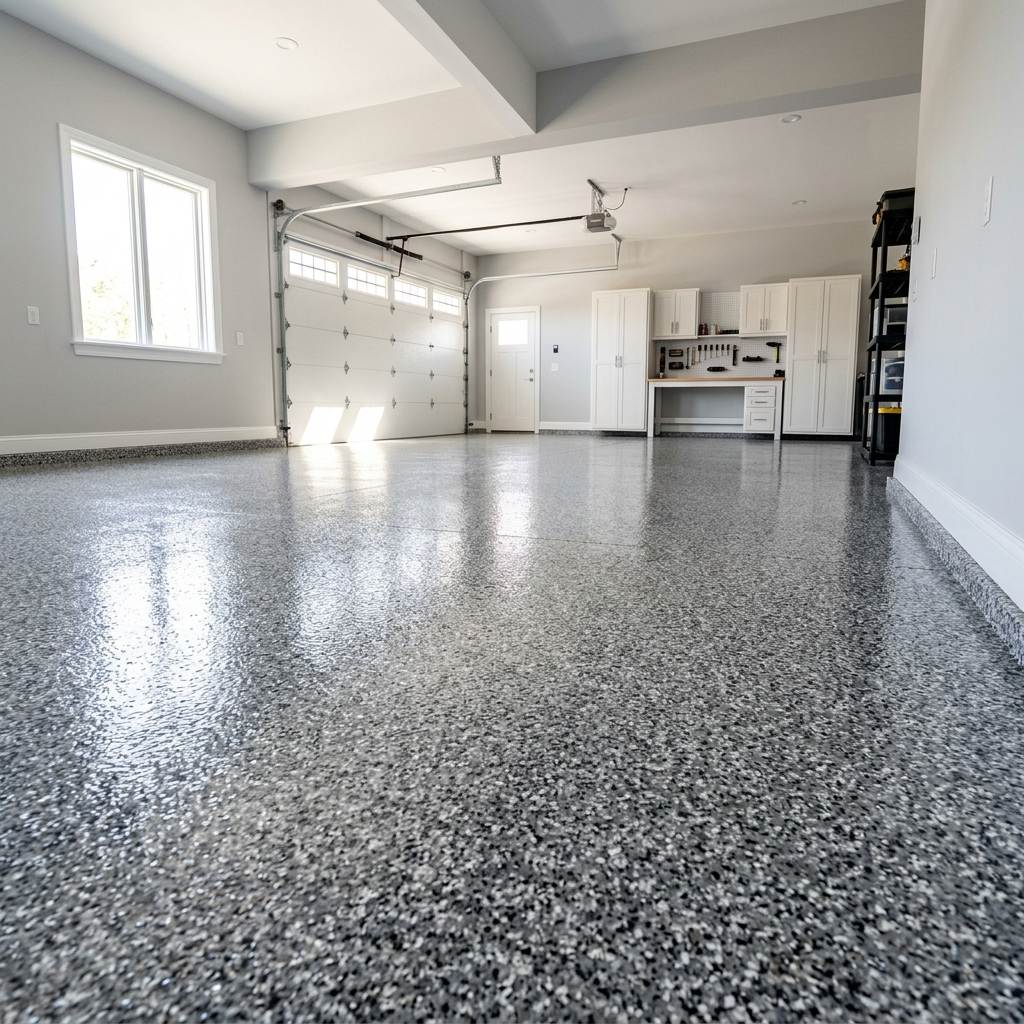
Comparing concrete finishing options for your home or business? Read our detailed comparison guide on polished concrete vs epoxy flooring.
When updating concrete surfaces, property owners often compare polished concrete vs epoxy flooring in Ocala, FL. Both options turn dusty concrete into clean, dust-free surfaces, but they function differently. Polished concrete is created by grinding the slab with progressively finer diamond pads, chemical densifiers, and polishes, highlighting the concrete's natural grain. Epoxy flooring is a high-build coating system applied over the slab, creating a seamless, protective barrier.
Choosing the right finish depends on your environment's requirements. Polished concrete offers a modern aesthetic, but it remains porous and is susceptible to stains from oil, grease, and acidic spills. Epoxy flooring, particularly when topped with polyaspartic, is non-porous and chemical-resistant, making it the superior choice for active garages, commercial kitchens, automotive shops, and areas where slip resistance and durability are critical.
Invest in a floor that increases your property value and protects your concrete for decades.
Epoxy creates a non-porous seal that prevents liquids and chemicals from staining the concrete.
Epoxy flake coatings offer a textured, slip-resistant finish, whereas polished concrete can be slick when wet.
Epoxy is available in unlimited colors, vinyl flakes, and metallic pigments for design flexibility.
High-build epoxy coatings hide cracks, pits, and visual color variations in the concrete slab.
The secret to a durable, bubble-free, and permanent concrete coating is in our preparation and premium resins.
Both options start with diamond grinding to prepare the concrete, though polished concrete goes through finer grits.
Cracks and pits are filled, but epoxy hides these repairs, while polished concrete will show them.
Polished concrete uses liquid densifiers, while epoxy uses high-build basecoats and broadcasts.
Epoxy receives a high-durability polyaspartic clear topcoat, while polished concrete uses a thin sealer.
Quick feature comparison between Polished Concrete and Epoxy Coatings:
| Project Size / Details | Estimated Price Range | What's Included |
|---|---|---|
| Stain Resistance | Polished: Moderate | Epoxy: Excellent | Epoxy's non-porous barrier resists oil, gas, acids, and chemical spills. |
| Slip Resistance | Polished: Low | Epoxy: High | Epoxy can include textured flakes or anti-slip aggregates for safety. |
| Average Installation Cost | $3.00 - $8.00 / sq ft | $4.00 - $12.00 / sq ft | Polished concrete cost depends on grit level; epoxy cost depends on system type. |
| Slab Defect Concealing | Polished: Low | Epoxy: High | Epoxy hides surface cracks and patch repairs under a seamless coating. |
We spend a significant amount of time grinding off failed DIY paints and coatings. Here is why choosing a professional makes all the difference.
| Feature | Our Professional System | Big Box DIY Kits |
|---|---|---|
| Concrete Surface Preparation | Industrial planetary diamond grinding (CSP 2-3) | Weak acid washing or light sanding |
| Basecoat Strength | 100% solids industrial epoxy / polyaspartic | Water-based paint (30-50% solids) |
| Chemical & Stain Resistance | ✓ Yes — completely impervious to oils/acids | ✗ No — stains and degrades easily |
| Hot-Tire Pickup Prevention | ✓ Yes — permanent molecular bond | ✗ No — peels and lifts within months |
| Lifespan Expectation | 20+ Years (Residential Lifetime Warranty) | 1 to 3 Years before structural failure |
Have questions about your project? Here are detailed answers from our local coating experts.
Basic polished concrete can be slightly cheaper, ranging from $3 to $8 per square foot. However, if the slab has heavy cracks or color variations, the prep and patching required can increase costs. Epoxy ranges from $4 to $12 per square foot and provides a durable, uniform finish regardless of concrete stains.
Epoxy flooring is generally superior for residential garages. Garages are exposed to oil leaks, battery acids, hot tires, and wet weather. Polished concrete will absorb oil stains and become slippery when wet, while epoxy flake systems provide chemical resistance and traction.
Yes. Polished concrete is densified and polished, but it remains a porous concrete surface. If oil, acidic cleaners, or spills are left on the surface, they can soak in and leave permanent stains. Epoxy is completely non-porous and resists staining.
Epoxy flake coatings are much more slip-resistant. The broadcast vinyl flakes create a textured, orange-peel finish that provides grip. Polished concrete is honed to a smooth gloss, which can be slick when wet or dusty.
Yes, but we must mechanically grind the surface with coarse diamond tools to remove the polished layer and open up the concrete pores, creating the proper surface profile for the epoxy to bond.
Contact Ocala Premium Epoxy Flooring today for a free, transparent, no-obligation quote. Our team is ready to serve you.