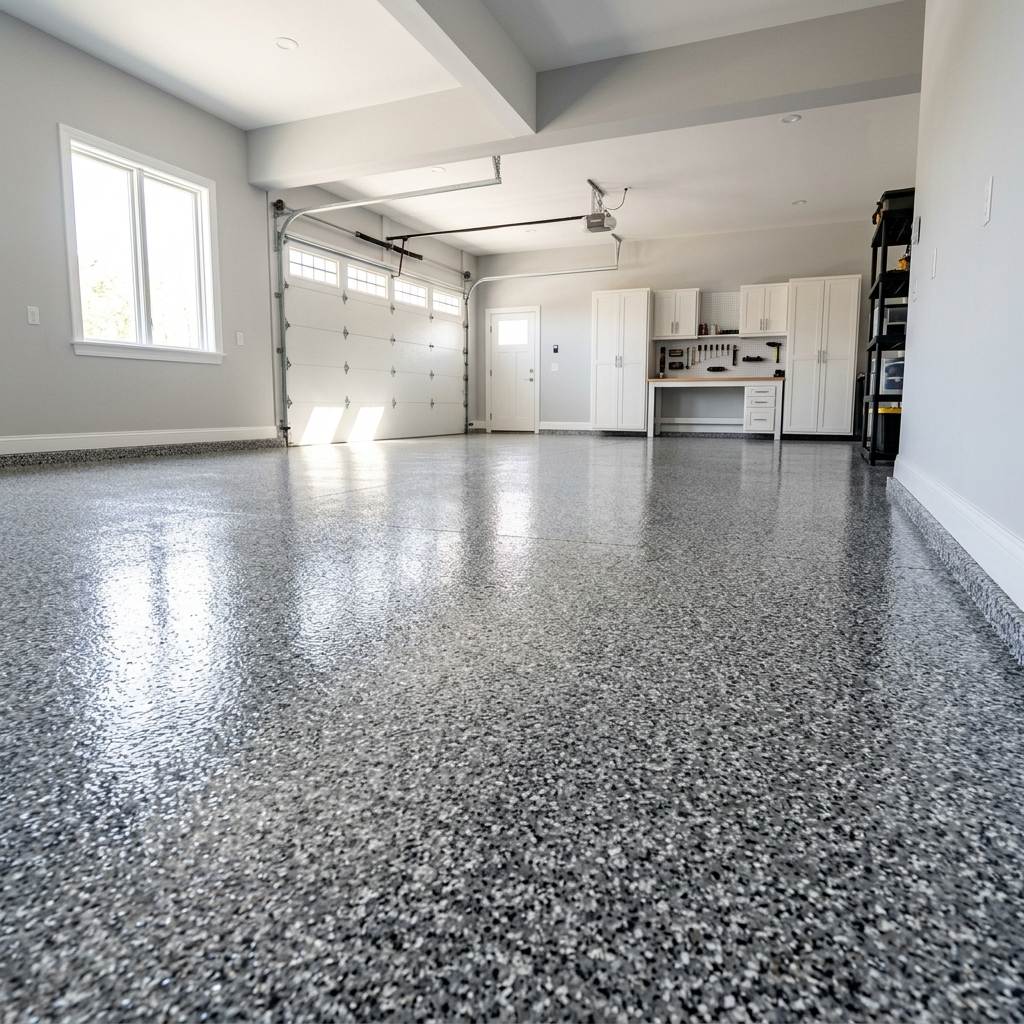
The next evolution in concrete floor protection. 100% UV stable, 4x harder than standard epoxy, and cures same-day. Our preferred topcoat for Florida's punishing sunlight, extreme heat, and high-humidity environment.
Let's be straightforward: traditional epoxy is an excellent material for bonding to concrete. But as a topcoat โ the surface layer that faces the UV rays, hot tires, chemicals, and foot traffic โ standard epoxy has significant weaknesses, especially in Florida's climate.
Standard epoxy topcoats yellow and amber within 6-12 months of UV exposure. In a state with 230+ sunny days per year, that glossy, expensive floor you paid for will quickly look aged and dingy. Polyaspartic, by contrast, is 100% UV stable โ it will look exactly as good in 10 years as the day it was installed.
That's why we use a hybrid system: 100% solids epoxy as the basecoat (for its unmatched concrete adhesion and moisture-mitigating properties), topped with polyaspartic as the protective surface layer (for UV stability, scratch resistance, and rapid cure). This combines the best properties of both materials into one superior system.
Here's a direct, factual comparison based on the actual material science โ not marketing claims.
| Property | Polyaspartic Topcoat | Standard Epoxy Topcoat |
|---|---|---|
| UV Stability | โ 100% UV stable โ won't yellow | โ Yellows within 6-12 months |
| Scratch Resistance | โ 4x harder (pencil hardness 4H+) | Standard hardness (2H) |
| Chemical Resistance | โ Resistant to oil, brake fluid, salt | Moderate chemical resistance |
| Cure Time | โ Walk in 12 hrs, drive in 48 hrs | Walk in 72 hrs, drive in 7 days |
| Abrasion Resistance | โ Superior โ Taber CS-17 <15mg | Good โ Taber CS-17 ~25mg |
| Hot-Tire Resistance | โ Excellent (high cross-link density) | Moderate (can soften at high temps) |
| Temperature Range | โ Installs at 0ยฐF to 120ยฐF | Requires 50ยฐF+ for proper cure |
| Longevity | โ 20+ years | 5-10 years (if it doesn't peel) |
100% UV stable. Never ambers, never discolors. Maintains crystal clarity for decades in 230+ sunny days/year.
Walk on your floor within 12 hours. Park your car within 48. No week-long cure times holding up your life.
Higher cross-link density means dramatically better scratch, scuff, and abrasion resistance. Maintains gloss longer.
Polyaspartic maintains its integrity at temperatures that would soften standard epoxy. No hot-tire pickup, no thermal delamination.
For topcoats, yes โ polyaspartic is significantly superior. It's 100% UV stable (won't yellow), 4x more scratch-resistant, and cures dramatically faster. However, we use a hybrid system: 100% solids epoxy as the basecoat because it bonds incredibly well to concrete, then polyaspartic as the topcoat for maximum surface protection. This combines the strengths of both materials into one superior system.
Polyaspartic cures dramatically faster than standard epoxy. Walk-on time is typically 12-24 hours, and full vehicle traffic is safe within 48-72 hours. Standard epoxy alone requires 72+ hours before light foot traffic and 7 days before vehicle traffic โ a massive difference in convenience.
No. This is the #1 advantage in Florida. Polyaspartic is 100% aliphatic โ meaning it's completely UV stable. It will not yellow, amber, or lose clarity from sun exposure, even after decades. Standard epoxy topcoats are aromatic compounds that begin degrading immediately upon UV exposure, which is why we never use epoxy as a topcoat on any floor exposed to sunlight.
Polyaspartic coatings are typically $5-$12 per square foot depending on the system configuration. This is modestly higher than standard epoxy-only systems ($4-$8/sq ft), but the dramatically superior UV stability, faster cure time, and longer lifespan make it a significantly better long-term value โ especially in Florida's harsh UV environment.
Yes, polyaspartic is an excellent choice for outdoor surfaces like pool decks, patios, and walkways. Its UV stability means it won't degrade in direct sunlight, and it can be combined with anti-slip additives for safe, textured outdoor surfaces. It also handles rain, humidity, and temperature swings better than standard epoxy.
Don't settle for a coating that yellows and fails in Florida heat. Get a polyaspartic system that's engineered to last decades.